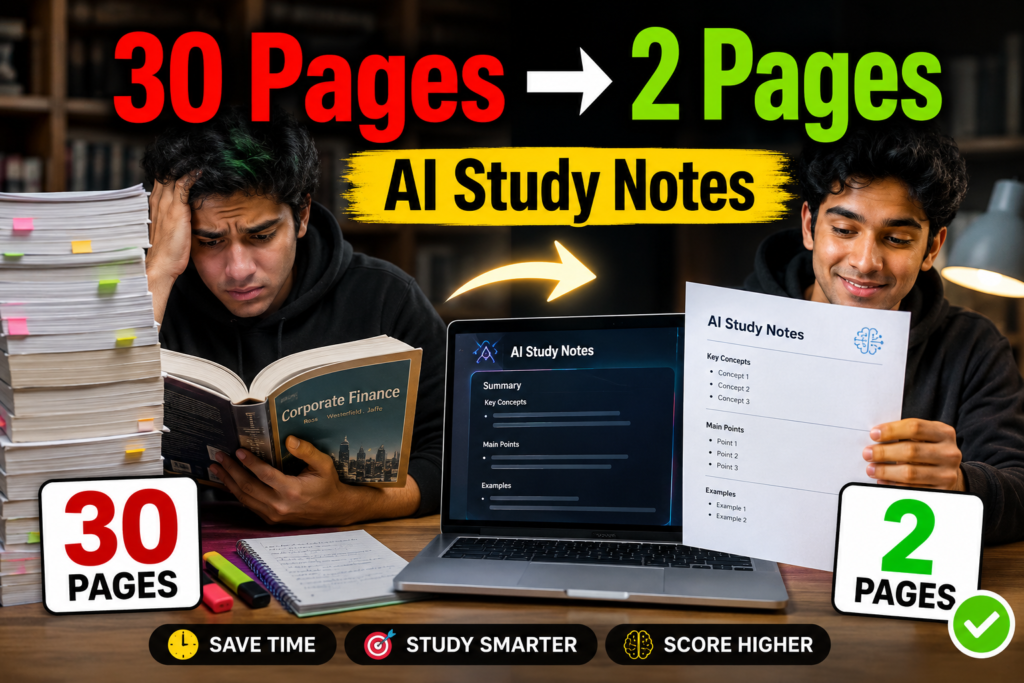
Quick Answer
This guide explains how to use AI tools to turn textbook pages into short study notes for faster and more organized exam preparation.
AI tools can help students convert long textbook chapters, PDFs, and scanned textbook pages into short, organized study notes by identifying key concepts, summarizing important information, and restructuring content into revision-friendly formats. When used correctly, AI can make studying more efficient without replacing active learning.
Table of Contents
Introduction
Why Students Struggle With Long Textbook Chapters
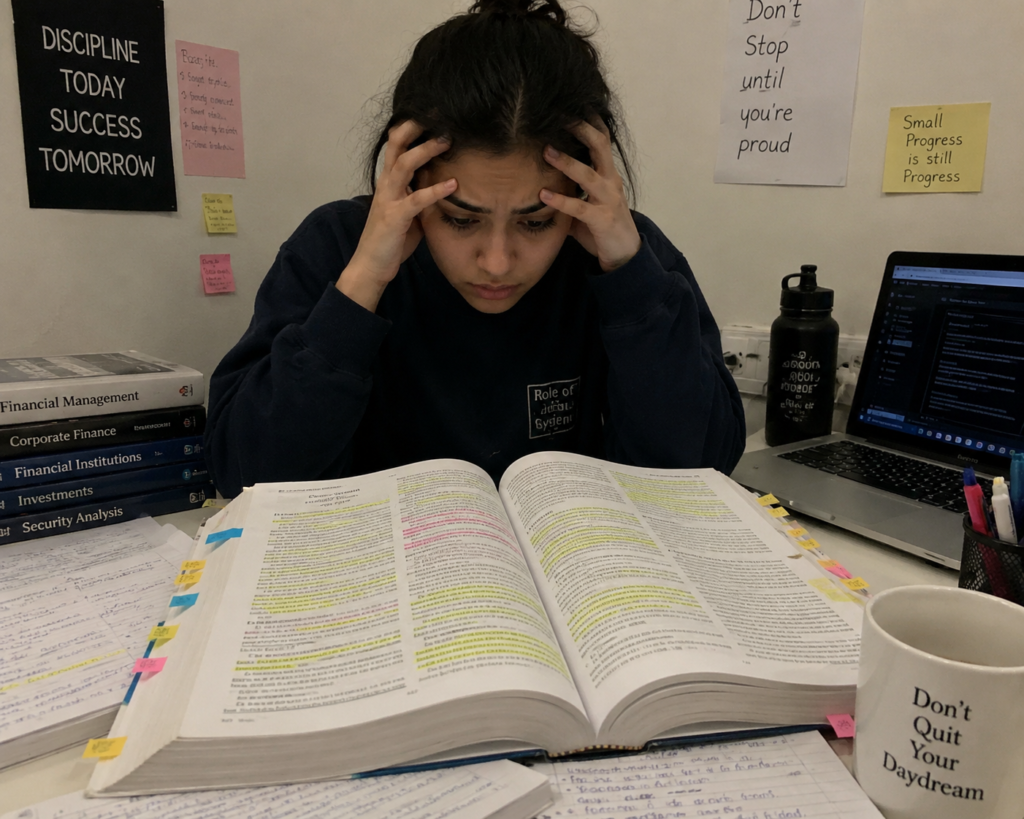
Most students have experienced this situation.
You open a textbook planning to study one chapter.
The chapter is 35 pages long.
Halfway through, you realize you have highlighted almost everything.
Nothing feels important because everything looks important.
Then exam week arrives and you are staring at hundreds of pages of content with very little time left.
This is one reason students often search for ways to turn textbook pages into shorter, more useful study materials.
The problem is not always a lack of effort.
The real problem is information overload.
Students often struggle with:
• Too many pages
• Dense academic language
• Limited revision time
• Difficulty identifying key concepts
• Forgetting important details after reading
This is where AI study tools can help.
Instead of reading the same chapter repeatedly, students can create structured AI study notes, textbook chapter summaries, and exam revision notes that are much easier to review.
Learning how to use AI tools to turn textbook pages into short study notes can help students reduce information overload and revise more efficiently.
Who This Guide Is For
If you are trying to learn how to use AI tools to turn textbook pages into short study notes, this guide is designed for you.
This guide is designed for:
High school students studying from large textbooks
• College students preparing for exams
• University students handling dense academic material
• Students using PDF textbooks
• Students with limited study time
• Students who struggle to summarize information
• Students who want faster revision methods
If you often spend more time organizing textbook content than actually learning it, this guide is for you.
Common Problems Students Face When Studying From Textbooks
Students rarely struggle because textbooks lack information.
They struggle because textbooks often contain too much information.
Common problems include:
Long Chapters
A single chapter may contain dozens of pages.
Dense Information
Important ideas are mixed with examples, explanations, and supporting details.
Difficult Language
Academic writing can slow down comprehension.
Limited Revision Time
Students often do not have enough time to review everything before exams.
Forgetting Important Details
After reading a long chapter, many students cannot remember the key points.
These challenges make textbook to notes workflows extremely valuable.
How AI Tools Can Turn Textbook Pages Into Study Notes
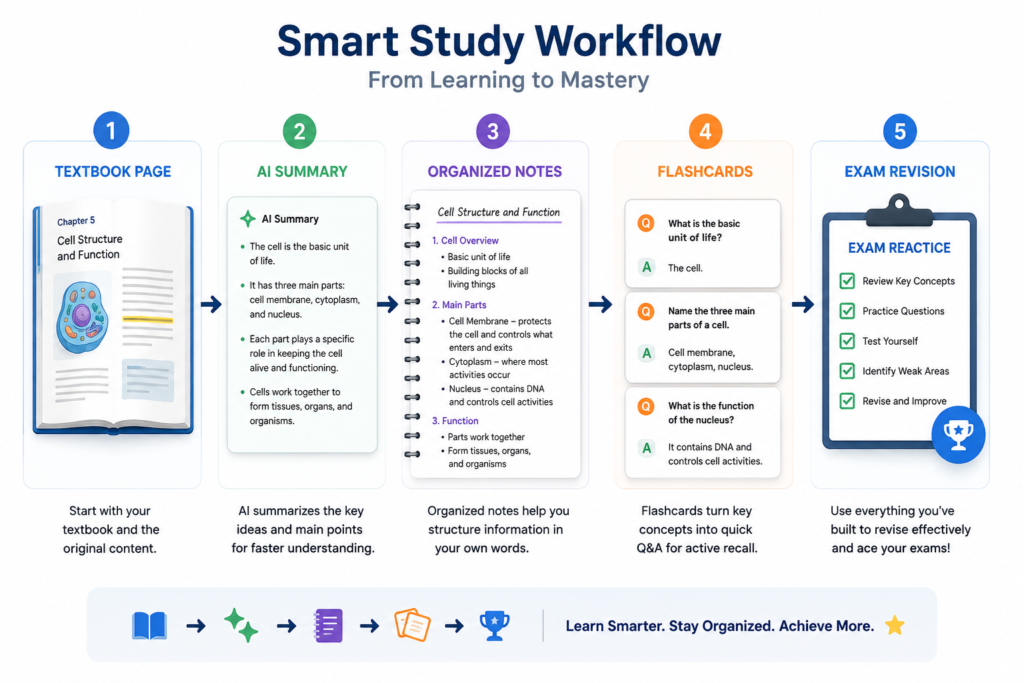
A simple workflow looks like this:
Textbook Page
↓
AI Textbook Summary
↓
Organized Notes
↓
Flashcards
↓
Practice Questions
↓
Exam Revision Notes
Instead of manually rewriting entire chapters, students can use AI to identify major concepts and convert information into a more useful format.
AI works best as an organizer and summarizer.
Students still need to understand the material themselves.
Benefits of Converting Textbooks Into Short Study Notes
One major benefit of learning how to use AI tools to turn textbook pages into short study notes is saving time during revision.
Using a textbook summarizer can provide several advantages.
Faster Revision
Reviewing two pages is easier than reviewing thirty pages.
Better Organization
Information becomes easier to navigate.
Reduced Overwhelm
Students focus on important concepts first.
Improved Recall
Structured notes are easier to remember.
More Efficient Exam Preparation
Students can spend more time practicing and less time rewriting.
30-Second Quick Start Guide
If you want a simple system, follow this process:
1. Capture textbook pages.
2. Upload them into an AI tool.
3. Generate summaries.
4. Organize the information by topic.
5. Create flashcards.6. Review before exams.
This basic workflow can be completed in minutes and gives students a fast starting point for exam preparation.
Step-by-Step Workflow for Turning Textbook Pages Into Study Notes
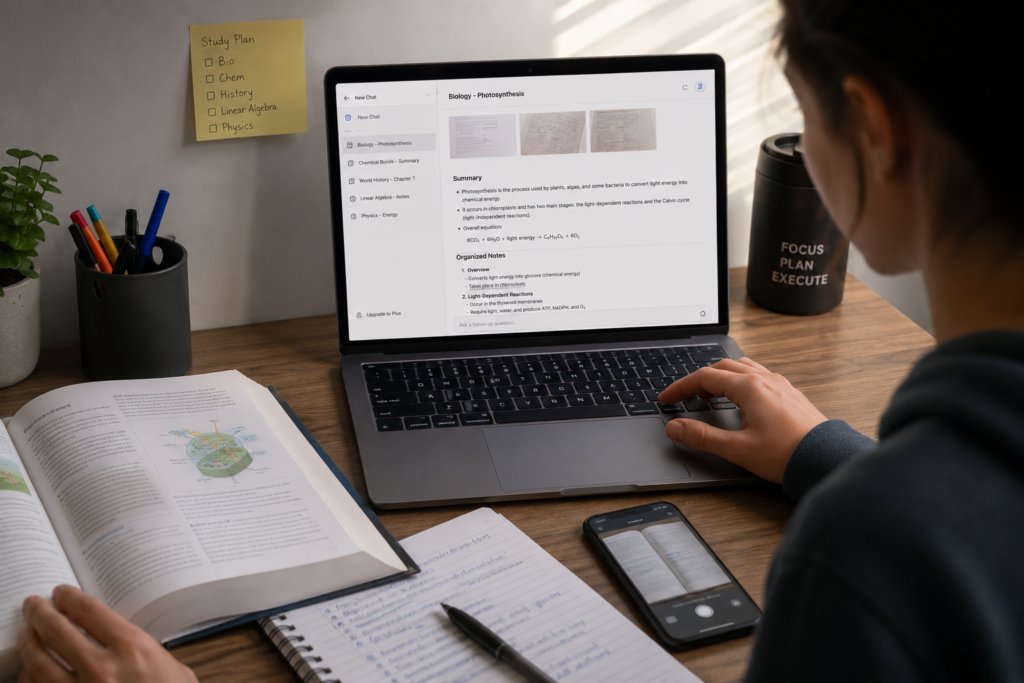
The following workflow shows exactly how to use AI tools to turn textbook pages into short study notes step by step.
Step 1 – Capture Textbook Pages
Take photos or scan pages using your phone.
You can also upload PDF textbooks directly.
Step 2 – Upload Pages, PDFs, or Images
Upload the content into an AI study note generator such as ChatGPT, NotebookLM, or Claude.
Step 3 – Generate Summaries
Ask the AI to summarize the material into key concepts.
Avoid requesting extremely short summaries at first.
Focus on accuracy.
Step 4 – Organize Information
Group ideas into:
• Definitions
• Key concepts
• Examples
• Exam topics
Step 5 – Create Revision Notes
Convert summaries into:
• Bullet-point notes
• Revision sheets
• Chapter outlines
Step 6 – Review and Refine
Always compare the summary against the original material.
Add missing details if necessary.
How a Student Can Turn a 30-Page Chapter Into 2 Pages of Study Notes
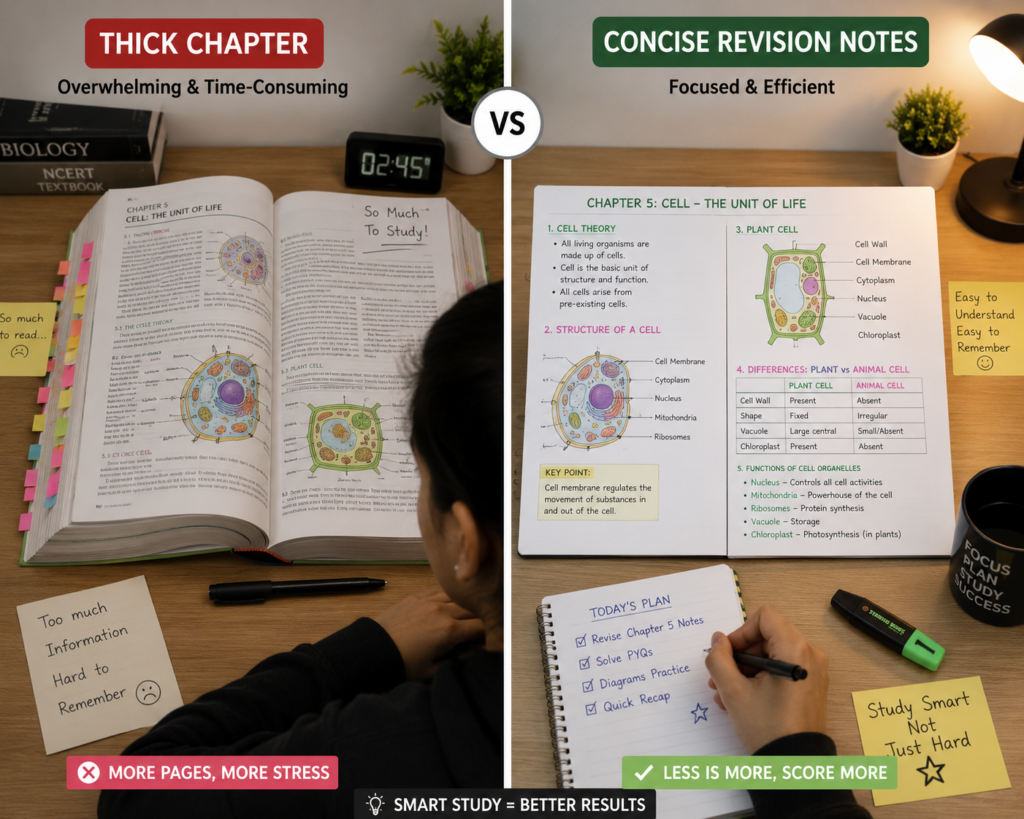
The easiest way to understand how to use AI tools to turn textbook pages into short study notes is through a real example.
Imagine a biology student studying cellular respiration.
The textbook chapter contains:
• 30 pages
• Multiple diagrams
• Technical explanations
• Detailed examples
The student:
1. Uploads the chapter PDF.
2. Generates an AI textbook summary.
3. Extracts key concepts.
4. Creates a two-page revision guide.
5. Builds flashcards from major terms.
Instead of rereading 30 pages before an exam, the student reviews two focused pages and then tests understanding with practice questions.
Before and After Example
Original Textbook Content
A textbook section may spend several pages explaining how photosynthesis converts light energy into chemical energy while discussing historical experiments and supporting evidence.
AI-Generated Short Study Notes
Photosynthesis:
• Occurs in chloroplasts
• Uses sunlight, water, and carbon dioxide
• Produces glucose and oxygen
• Supports plant growth
• Important for ecosystem energy flow
The goal is not to replace the chapter.
The goal is to create a revision-friendly version.
How Much Time Can AI Save When Studying From Textbooks?
Students learning how to use AI tools to turn textbook pages into short study notes often discover that summarizing chapters takes far less time than doing everything manually.
Results vary by subject and study habits.
However, many students spend:
• 2–3 hours creating chapter summaries manually
• 30–60 minutes organizing notes
• Additional time creating flashcards
AI may reduce part of this workload by generating initial summaries and structured notes.
Students can then spend more time reviewing concepts rather than formatting information.
How to Turn Textbook Images and PDFs Into Study Notes
One practical way to learn how to use AI tools to turn textbook pages into short study notes is by starting with textbook images and PDFs.
Many students use:
• Scanned PDFs
• Digital textbooks
• Smartphone photos
• Screenshots from online resources
A practical workflow:
PDF or Image
↓
Upload to AI
↓
Generate Summary
↓
Create Notes
↓
Generate Flashcards
↓
Exam Revision
This approach works particularly well when students need quick exam revision notes from large amounts of content.
If most of your study material comes from classroom lectures instead of textbooks, check out our guide on Best AI Tools for Students to Take Notes From Lectures Automatically.
Best AI Tools for Turning Textbook Pages Into Study Notes
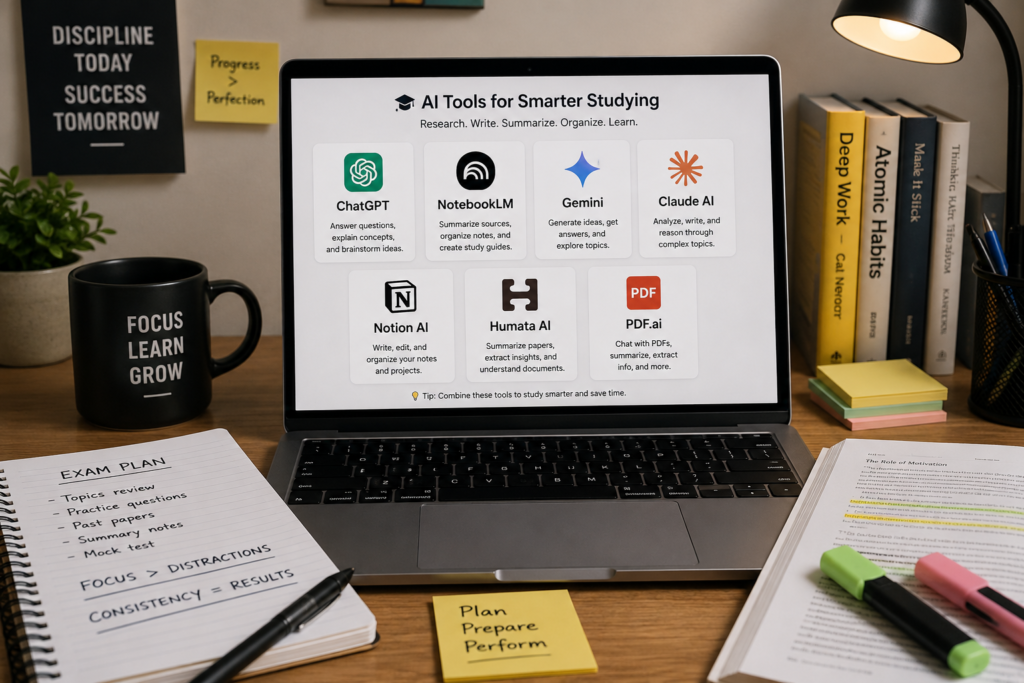
Now let’s look at the tools that make how to use AI tools to turn textbook pages into short study notes much easier.
The best tool depends on how you study.
Some students work mostly with PDFs.
Others use physical textbooks.
Some want flashcards, while others need fast exam revision notes.
The goal is not to find the most powerful tool.
The goal is to find the tool that fits your study workflow.
ChatGPT
Best Use Case
Turning textbook chapters into structured notes, flashcards, and practice questions.
Strengths
• Flexible outputs
• Excellent explanations
• Strong note organization
• Useful for revision
Weaknesses
• Depends on prompt quality
• May occasionally miss context
Free or Paid
Free and Paid
Best For
Students who want an all-in-one textbook to notes workflow.
NotebookLM
Best Use Case
Working with large PDFs and multiple textbook chapters.
Strengths
• Designed around source documents
• Excellent chapter summaries
• Strong organization
Weaknesses
• Less flexible than ChatGPT
Free or Paid
Mostly Free
Best For
Students preparing for midterms and finals.
Google Gemini
Best Use Case
Quick textbook chapter summaries.
Strengths
• Fast
• Easy to use
• Handles large content well
Weaknesses
• Sometimes too brief
Free or Paid
Free and Paid
Best For
Students who need quick study notes.
Claude AI
Best Use Case
Summarizing long academic content.
Strengths
• Excellent readability
• Strong organization
• Clear explanations
Weaknesses
• Fewer study-focused features
Free or Paid
Free and Paid
Best For
Students dealing with long reading assignments.
Notion AI
Best Use Case
Building long-term study systems.
Strengths
• Excellent organization
• Combines notes and planning
• Useful for multiple courses
Weaknesses
• Learning curve
Free or Paid
Freemium
Best For
Students managing several subjects.
Humata AI
Best Use Case
PDF textbook analysis.
Strengths
• PDF-focused
• Fast answers from documents
• Strong search capability
Weaknesses
• Mainly document-focused
Free or Paid
Freemium
Best For
Students working with digital textbooks.
PDF.ai
Best Use Case
Extracting information from textbook PDFs.
Strengths
• Easy PDF interaction
• Fast summaries
Weaknesses
• Limited broader study features
Free or Paid
Freemium
Best For
Students who primarily use PDF textbooks.
Comparison Table
Students researching how to use AI tools to turn textbook pages into short study notes can use the comparison table below to choose the right tool for their study workflow.
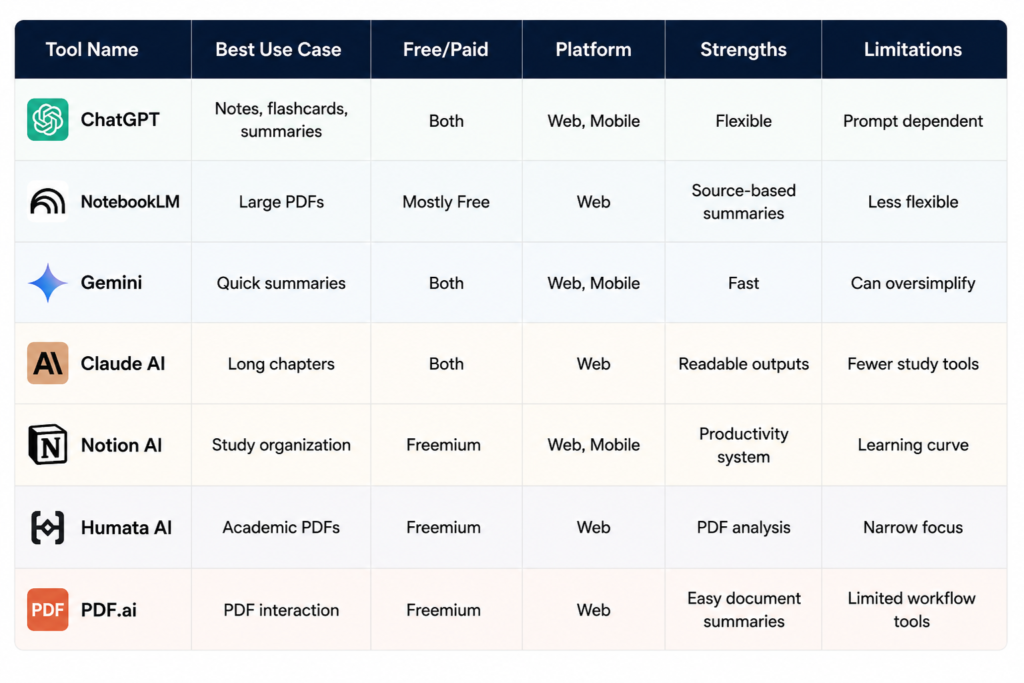
| Tool Name | Best Use Case | Free/Paid | Platform | Strengths | Limitations |
| ChatGPT | Notes, flashcards, summaries | Both | Web, Mobile | Flexible | Prompt dependent |
| NotebookLM | Large PDFs | Mostly Free | Web | Source-based summaries | Less flexible |
| Gemini | Quick summaries | Both | Web, Mobile | Fast | Can oversimplify |
| Claude AI | Long chapters | Both | Web | Readable outputs | Fewer study tools |
| Notion AI | Study organization | Freemium | Web, Mobile | Productivity system | Learning curve |
| Humata AI | Academic PDFs | Freemium | Web | PDF analysis | Narrow focus |
| PDF.ai | PDF interaction | Freemium | Web | Easy document summaries | Limited workflow tools |
Best AI Tool Based on Your Situation
Different students approach how to use AI tools to turn textbook pages into short study notes in different ways.
Students Using PDFs
Best Choice:
• NotebookLM
• Humata AI
• PDF.ai
Students Using Physical Textbooks
Best Choice:
• ChatGPT
• Gemini
Students Needing Flashcards
Best Choice:
• ChatGPT
• NotebookLM
Students Preparing for Exams
Best Choice:
• ChatGPT
• Claude AI
• NotebookLM
Students Who Only Want Free Tools
Best Choice:
• ChatGPT Free
• NotebookLM
• Gemini
Students With Limited Technical Skills
Best Choice:
• Gemini
• ChatGPT
Best Method for Different Subjects
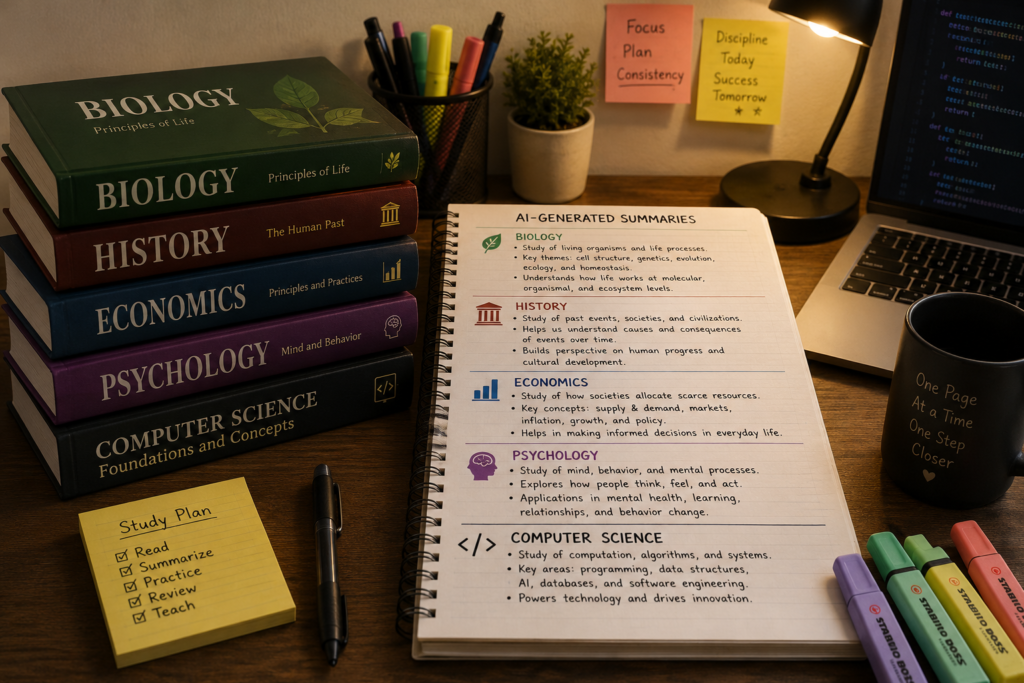
Biology Textbooks
Focus on:
• Processes
• Definitions
• Diagrams
• Terminology
Convert chapters into:
• Summary sheets
• Flashcards
• Labeling exercises
History Textbooks
Focus on:
• Events
• Dates
• Causes
• Consequences
AI works well for building timelines and chapter summaries.
Economics Textbooks
Focus on:
• Models
• Definitions
• Relationships
Ask AI to simplify concepts and create examples.
Psychology Textbooks
Focus on:
• Theories
• Researchers
• Experiments
Convert content into comparison charts.
Computer Science Textbooks
Focus on:
• Algorithms
• Concepts
• Terminology
Use AI to simplify technical explanations while preserving accuracy.
How Students Can Turn Textbook Notes Into Flashcards and Practice Questions
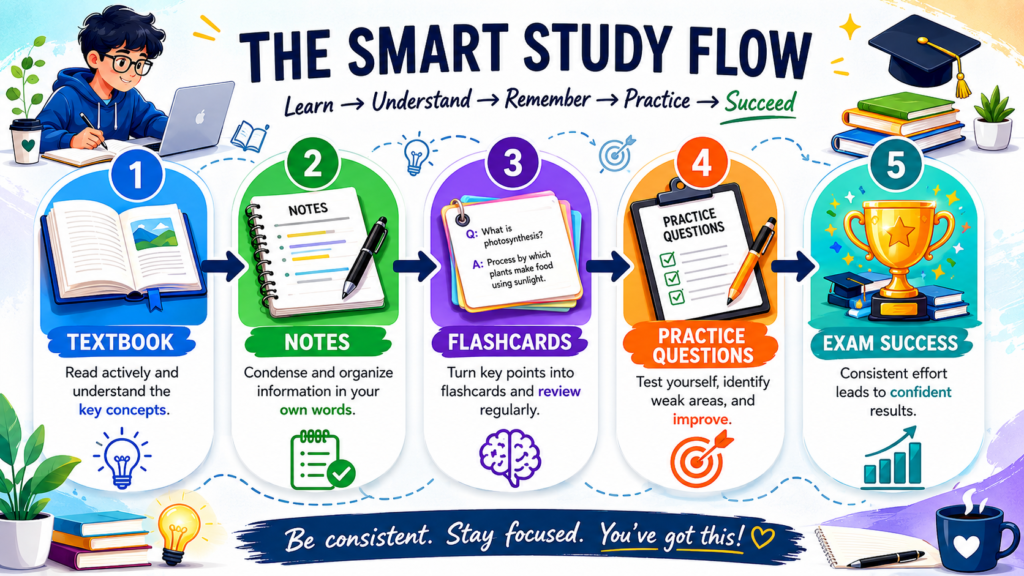
After learning how to use AI tools to turn textbook pages into short study notes, many students use those notes to build flashcards and practice questions.
A useful workflow looks like this:
Textbook
↓
Short Notes
↓
Flashcards
↓
Practice Questions
↓
Exam Revision
Example prompt:
“Turn these study notes into 20 flashcards and 10 exam-style practice questions.”
This creates active recall opportunities instead of passive reading.
Students interested in revision systems may also benefit from guides about AI flashcard tools and exam revision workflows.
What AI Can Miss When Summarizing Textbooks
Even when you know how to use AI tools to turn textbook pages into short study notes, it is important to understand what AI may overlook.
AI summaries are useful.
They are not perfect.
Always watch for:
Diagrams
Important visual information may disappear.
Charts
Relationships between data points may be simplified.
Examples
Some examples provide important context.
Case Studies
AI often compresses these heavily.
Instructor Priorities
Your teacher may emphasize information that AI considers secondary.
When Students Should Not Rely on AI Summaries
Manual review is still important for:
• Complex diagrams
• Charts and graphs
• Mathematical derivations
• Scientific formulas- Case studies
• Instructor-provided exam topics
Use AI as a shortcut to organization, not a substitute for understanding.
Common Mistakes Students Make When Using AI to Summarize Textbooks
Asking for Extremely Short Summaries
Important details disappear.
Never Checking the Original Chapter
Mistakes can go unnoticed.
Skipping Active Recall
Reading summaries alone is not enough.
Creating Too Many Notes
More notes do not always mean better learning.
Trusting AI Blindly
Verification remains essential.
Students who struggle with disorganized study materials may also find our guide on Best AI Tools for Students With Messy Class Notes useful.
How to Use AI Responsibly While Studying
Students who understand how to use AI tools to turn textbook pages into short study notes should still review the original material carefully.
A good workflow is:
Understand
↓
Summarize
↓
Review
↓
Test Yourself
↓
Revise
Students learn more effectively when AI supports thinking instead of replacing it.
Best ChatGPT Prompts for Turning Textbook Pages Into Study Notes
1. Summarize this chapter into one page of study notes.
2. Identify the most important exam concepts.
3. Turn this chapter into bullet-point revision notes.
4. Create a chapter outline from this content.
5. Simplify this textbook section for a beginner.
6. Generate flashcards from these notes.
7. Create practice questions from this chapter.
8. Explain difficult concepts in simpler language.
9. Build a revision checklist from these notes.
10. Compare the major concepts in this chapter.
11. Find information likely to appear on an exam.
12. Create a two-page study guide.
13. Extract all important definitions.
14. Convert this chapter into a memory-friendly summary.
15. Turn these notes into a quick-review sheet.
Real Student Examples
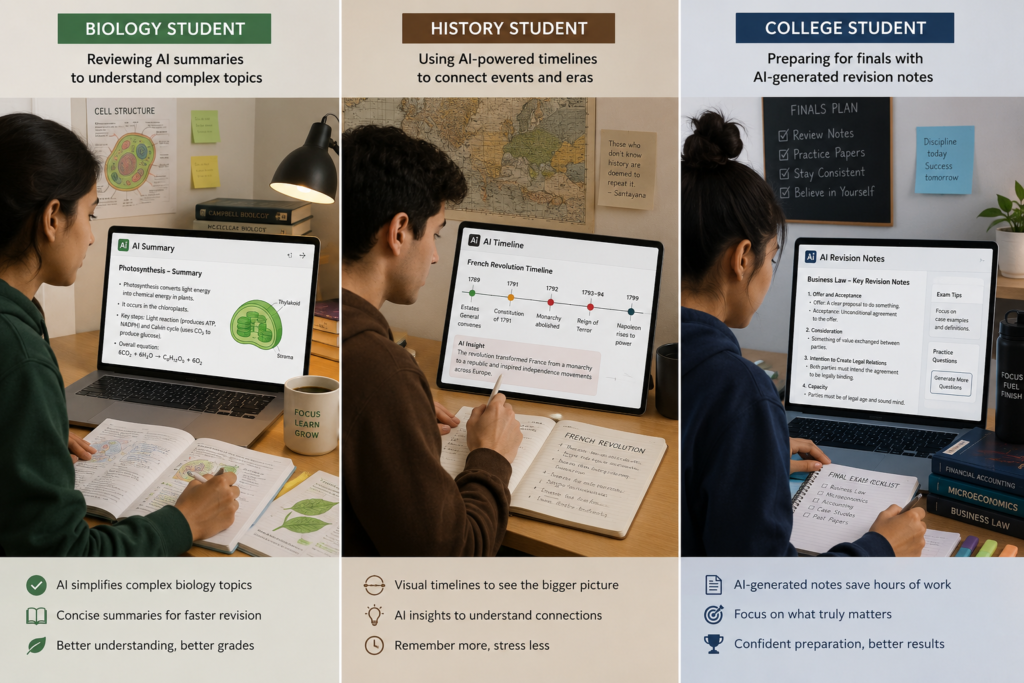
Biology Student
A biology student uploads a 25-page chapter on genetics.
AI creates:
• Summary notes
• Key definitions
• Flashcards
Revision becomes faster and more focused.
History Student
A history student struggles with long chapters covering multiple events.
AI converts the chapter into:
• Timelines
• Event summaries
• Cause-and-effect notes
The information becomes easier to remember.
College Student Preparing for Finals
A college student has six PDF textbooks and limited time.
Using NotebookLM and ChatGPT, the student creates:
• Chapter summaries
• Exam revision notes
• Practice questions
Instead of reviewing hundreds of pages repeatedly, the student studies structured materials.
FAQ
The following questions are commonly asked by students learning how to use AI tools to turn textbook pages into short study notes for exams and daily revision.
Can AI summarize textbook pages?
Many students ask how to use AI tools to turn textbook pages into short study notes before exams.
Yes. Most modern AI study tools can summarize textbook content and create organized notes.
What is the best AI tool for textbook summaries?
ChatGPT and NotebookLM are among the most useful options for textbook chapter summary workflows.
Can AI create study notes from PDFs?
Yes. Many AI study tools can analyze PDFs and convert them into structured notes.
Can AI create flashcards from textbook chapters?
Yes. AI can convert summaries into flashcards and practice questions.
Is AI accurate for studying?
Usually, but students should always review important information against the original source.
Can AI help with exam revision?
Yes. AI-generated exam revision notes can help students review material more efficiently.
What is the best textbook to notes workflow?
Upload content, generate summaries, organize notes, create flashcards, and test understanding.
Conclusion
Once you understand how to use AI tools to turn textbook pages into short study notes, long chapters become much easier to manage.
Long textbook chapters often create more stress than learning.
Students spend hours highlighting, organizing, and rewriting information before they even begin revising.
AI study tools can reduce this workload by helping students convert textbook pages into structured study notes, flashcards, practice questions, and exam revision notes.
The most effective students do not use AI to avoid learning.
They use it to remove unnecessary friction.
Instead of spending all evening rewriting a chapter, they spend more time understanding concepts, reviewing information, and preparing for exams.
A good AI textbook summary is not the final goal.
The final goal is understanding the material well enough that you no longer need the summary.
Thank you for guide